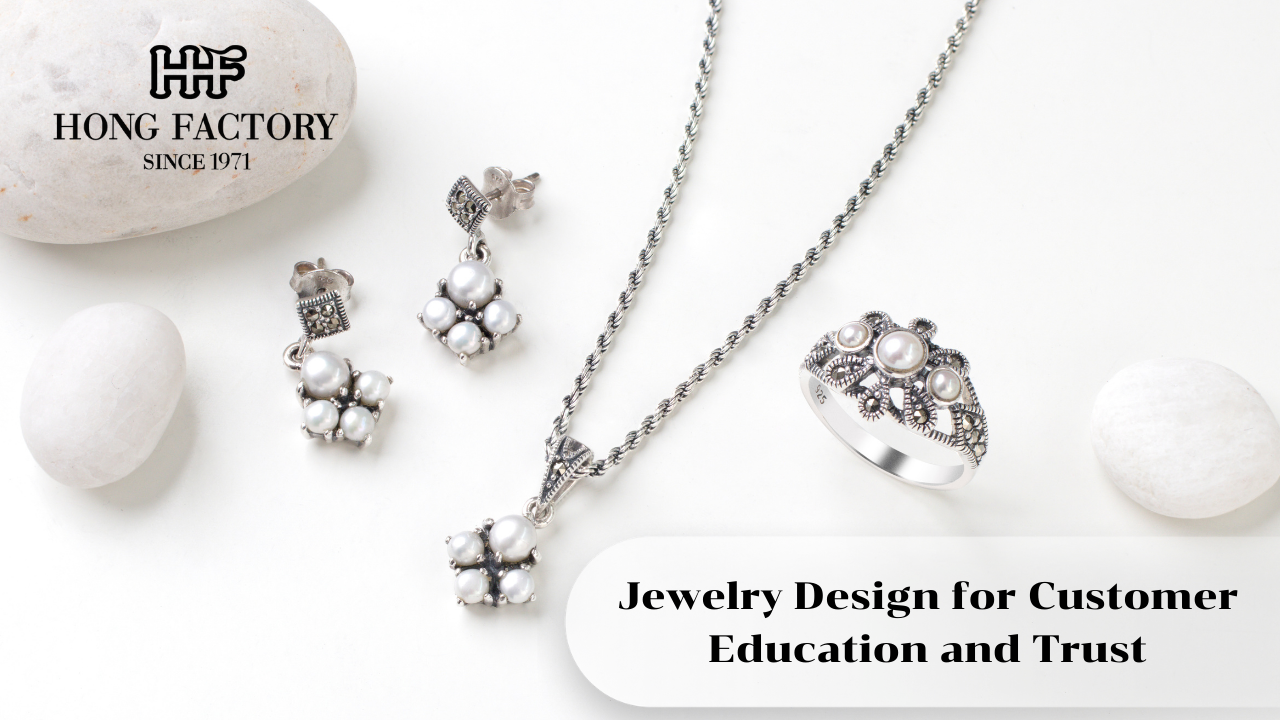
In the jewelry industry, trust is one of the most valuable assets a brand can build. Customers are investing not only money, but also emotion, symbolism, and long-term expectation. For silver and marcasite jewelry brands, jewelry design for customer education and trust means creating products that are easy to understand, transparent in value, and reliable in quality. sterling silver meaning
This article explores how jewelry design can actively educate customers, reduce uncertainty, and build lasting trust through clarity, craftsmanship, and honest communication.
Why Customer Education Matters in Jewelry

Informed customers feel confident.
Jewelry buyers often face uncertainty about:
- Materials and authenticity
- Durability and care
- Pricing justification
- Long-term value
Design that supports education helps customers make confident decisions.
Trust Begins with Design Clarity
Clarity reduces hesitation.
Jewelry design that builds trust typically:
- Shows materials clearly
- Avoids misleading proportions
- Reflects quality honestly
When design matches expectation, trust grows naturally.
Educating Customers Through Material Transparency
Materials communicate value.
Silver as an Educational Opportunity
Sterling silver allows brands to educate customers about:
- Purity standards (925 silver)
- Durability and everyday wear
- Maintenance and care routines
Clear design and labeling reinforce credibility.
Marcasite and Craftsmanship Awareness
Marcasite jewelry offers a chance to explain:
- Hand-setting techniques
- Vintage heritage and history
- Differences between marcasite and other stones
Education transforms detail into perceived value.
Design Features That Signal Quality
Quality should be visible.
Visual Cues of Trustworthy Design
Customers associate trust with:
- Secure stone settings
- Smooth, finished edges
- Balanced weight and proportion
Design should visibly reflect craftsmanship.
Using Design to Explain Function and Wearability
Function builds confidence.
Designs that educate customers:
- Clearly show clasps and closures
- Demonstrate comfort and balance
- Avoid overly fragile structures
Wearability reassurance supports purchase decisions.
Jewelry Design and Care Education
Longevity depends on knowledge.
Design can support care education by:
- Encouraging removable or reinforced components
- Supporting easy cleaning and storage
- Avoiding unnecessary complexity
Care-friendly design reduces post-purchase issues.
Design for Honest Pricing Perception
Design justifies price.
Customers trust pricing when design:
- Reflects material and labor clearly
- Avoids artificial complexity
- Matches visual value to cost
Transparent design supports fair pricing perception.
Using Consistent Design Language to Build Trust
Consistency signals reliability.
Brands build trust when customers:
- Recognize recurring design elements
- Experience consistent quality
- Feel familiarity across collections
Design consistency reinforces brand credibility.
Educational Design in E-commerce and Digital Platforms
Online clarity is essential.
Design that educates digitally:
- Reads clearly on screen
- Supports close-up detail views
- Aligns with accurate product descriptions
Clarity reduces returns and dissatisfaction.
Storytelling as an Educational Tool
Stories make learning memorable.
Design storytelling can explain:
- Inspiration and symbolism
- Craft processes
- Material sourcing
Stories humanize the brand and build emotional trust.
Jewelry Design for First-Time Buyers
First impressions matter most.
Designs for new customers should:
- Be easy to understand visually
- Feel safe and wearable
- Avoid overly niche symbolism
Trust begins with accessibility.
Reducing Customer Anxiety Through Design
Design can lower risk perception.
Anxiety decreases when design:
- Appears durable
- Feels comfortable and practical
- Matches real-life usage scenarios
Confidence leads to conversion.
Educating Through Packaging and Presentation
Design extends beyond the product.
Packaging that supports trust includes:
- Clear material information
- Care instructions
- Brand authenticity markers
Presentation reinforces professionalism.
Training Internal Teams Through Design Systems
Education is internal as well.
Clear design systems help:
- Sales teams explain products accurately
- Retail staff build customer trust
- Maintain consistent messaging
Design clarity supports internal alignment.
Avoiding Design Practices That Undermine Trust
Small issues damage credibility.
Mistakes to Avoid
- Overstated visual claims
- Inconsistent finishes
- Poorly secured stones
Honesty in design protects trust.
Measuring Trust Through Customer Behavior
Trust is observable.
Brands can evaluate trust by:
- Repeat purchases
- Customer reviews
- Low return rates
Design plays a direct role in these metrics.
Long-Term Value of Education-Driven Jewelry Design
Trust compounds over time.
Brands that prioritize education through design:
- Build loyal customer bases
- Reduce friction and returns
- Strengthen long-term brand equity
Trust becomes a competitive advantage.
Conclusion
Jewelry design for customer education and trust is about clarity, honesty, and craftsmanship. By using transparent materials like silver, showcasing the artistry of marcasite, and designing with wearability and understanding in mind, jewelry brands can empower customers rather than confuse them. In an industry built on emotion and value, educated customers are confident customers—and confidence is the foundation of lasting trust.