Marcasite jewelry is admired for its intricate detail, durability, and timeless elegance. Unlike mass-produced accessories, authentic marcasite pieces are created through a careful, labor-intensive process that relies heavily on skilled craftsmanship. Understanding how marcasite jewelry is made step by step helps buyers appreciate its value and allows brands to communicate authenticity and quality with confidence.
This article explains the complete production journey of marcasite jewelry—from raw materials to the finished piece—highlighting the techniques that define this traditional art form. mood ring color meanings
Step 1: Design Concept and Pattern Creation
Every marcasite jewelry piece begins with a design.
Inspiration and Planning
Designers draw inspiration from:
- Victorian and Art Deco motifs
- Floral and geometric patterns
- Cultural and symbolic elements
Designs are carefully planned to accommodate dozens or hundreds of small stones while maintaining balance and wearability.
Pattern Development
Once the concept is finalized, a detailed pattern or sketch is created. This blueprint determines stone placement, metal thickness, and overall proportions.
Step 2: Creating the Silver Base
The foundation of marcasite jewelry is sterling silver 925.
Metal Preparation
Sterling silver is melted and shaped using casting or fabrication methods. The goal is to create a solid base that can support precise stone setting.
Forming the Jewelry Structure
Artisans form the basic shape—ring, pendant, earring, or bracelet—ensuring:
- Correct dimensions
- Structural balance
- Smooth surfaces for stone setting
Step 3: Refining the Metal Surface
Before stones are set, the silver surface must be perfected.
Filing and Smoothing
The metal is carefully filed and polished to remove imperfections. A smooth surface ensures secure stone placement and enhances visual quality.
Marking Stone Positions
Exact positions for each marcasite stone are marked. Accuracy at this stage is critical for symmetry and design integrity.
Step 4: Cutting Seats for the Stones
Stone seats are carved directly into the silver.
Precision Carving
Using fine tools, artisans create tiny recesses where each stone will sit. These seats must match the stone size perfectly to prevent movement.
This step requires steady hands and deep experience.
Step 5: Hand-Setting the Marcasite Stones
This is the most defining stage of the process.
Individual Stone Placement
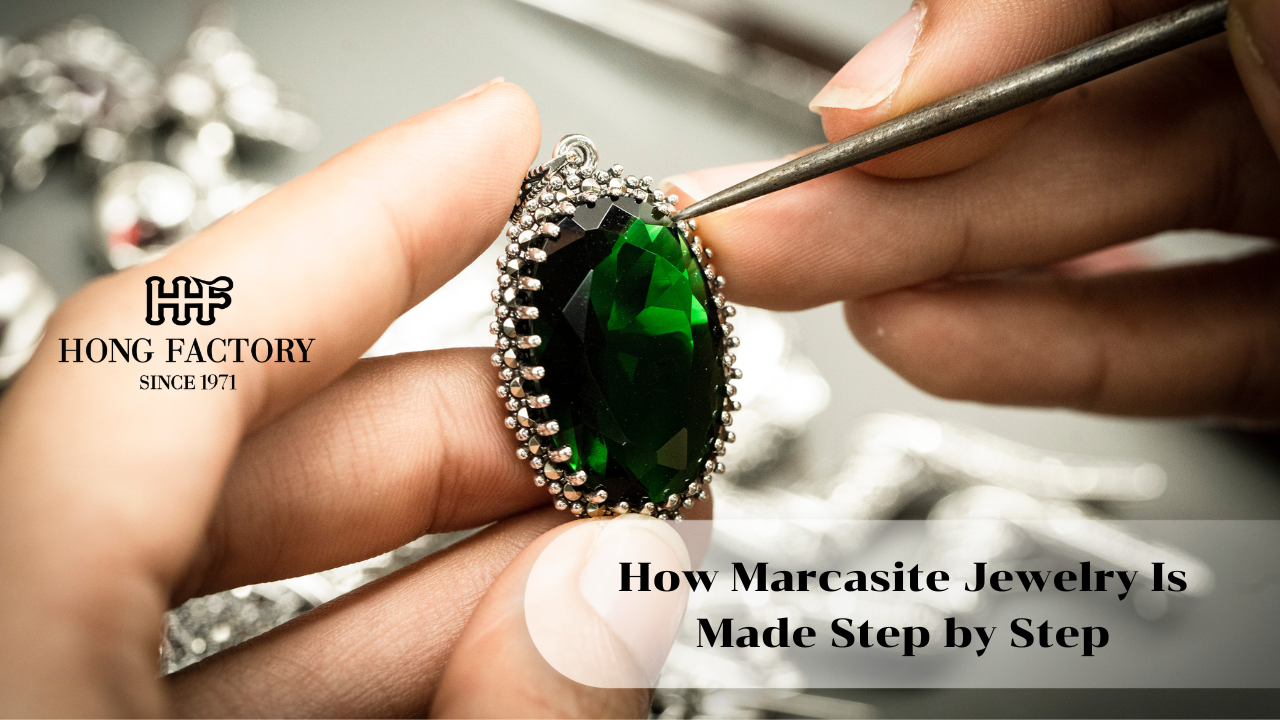
Each marcasite (pyrite) stone is placed one by one into its seat. Artisans then raise microscopic beads of silver around the stone to hold it securely.
No Glue Used
Authentic marcasite jewelry relies solely on metal pressure. Glue is never part of traditional marcasite craftsmanship.
Time-Intensive Work
A single piece may take hours or days to complete, depending on the number of stones.
Step 6: Checking Alignment and Security
Quality control happens continuously.
Visual and Physical Inspection
Artisans check:
- Stone alignment
- Uniform spacing
- Secure placement
Any loose or misaligned stones are corrected immediately.
Step 7: Oxidation and Surface Finishing
Many marcasite pieces feature oxidized silver.
Enhancing Contrast
Oxidation darkens recessed areas, increasing contrast and making the marcasite stones stand out. This step adds depth and vintage character.
Polishing Highlights
Raised areas are lightly polished to restore shine while preserving contrast.
Step 8: Final Polishing and Cleaning
After setting and oxidation, the jewelry undergoes final finishing.
Gentle Polishing
Artisans polish carefully to avoid disturbing stones. The goal is a clean, refined surface with visible detailing.
Cleaning Residue
Any remaining compounds or residues are removed to ensure clarity and comfort.
Step 9: Hallmarking and Stamping
Authentic marcasite jewelry is properly marked.
Silver Identification
Pieces are stamped with:
- “925”
- “STERLING”
These marks confirm metal authenticity and quality.
Step 10: Final Quality Inspection
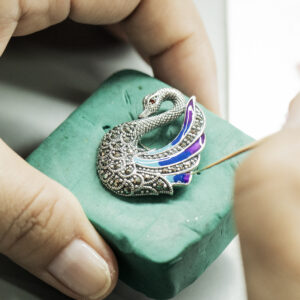
Before leaving the workshop, each piece is inspected.
Quality Checklist
- Secure stones
- Smooth edges
- Functional clasps or hinges
- Overall symmetry
Only pieces meeting standards move forward.
Step 11: Packaging and Presentation
Presentation reflects value.
Protective Packaging
Marcasite jewelry is packaged to protect stones and silver from moisture and impact.
Proper storage preserves craftsmanship during transport.
Traditional vs Modern Production Methods
While some tools have improved, the core process remains unchanged.
What Has Changed
- Improved precision tools
- Better quality control
What Has Not Changed
- Hand-setting technique
- Use of sterling silver
- Artisan involvement
Tradition remains central.
Why This Process Adds Value
Each step contributes to quality.
Craftsmanship Value
- Labor-intensive production
- Skilled artisan involvement
- Durable, repairable construction
This process defines authentic marcasite jewelry.
Understanding Production Helps Buyers Choose Better
Knowing how marcasite jewelry is made helps buyers:
- Identify quality craftsmanship
- Avoid glued imitations
- Appreciate fair pricing
Education builds confidence.
Conclusion
Marcasite jewelry is made through a meticulous, step-by-step process that emphasizes craftsmanship over speed. From careful design and sterling silver preparation to hand-setting each stone and final inspection, every stage contributes to the jewelry’s beauty, durability, and timeless appeal. Understanding how marcasite jewelry is made not only deepens appreciation but also reinforces why authentic pieces remain valued across generations.